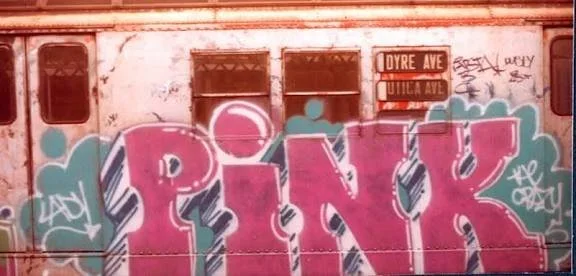
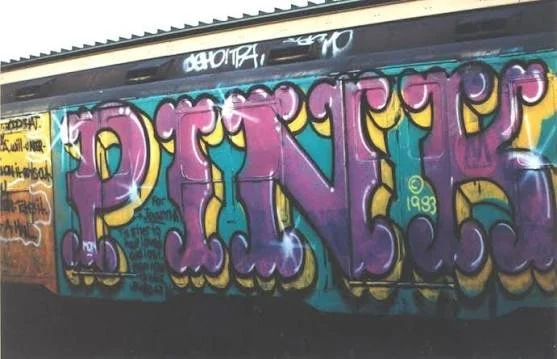
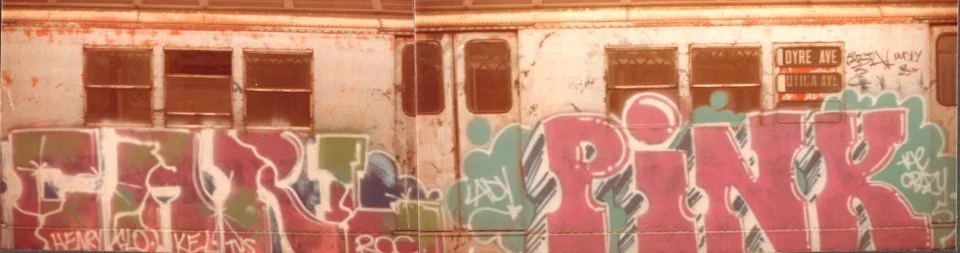
Two Police Raids Forced Lady Pink to Leave New York City
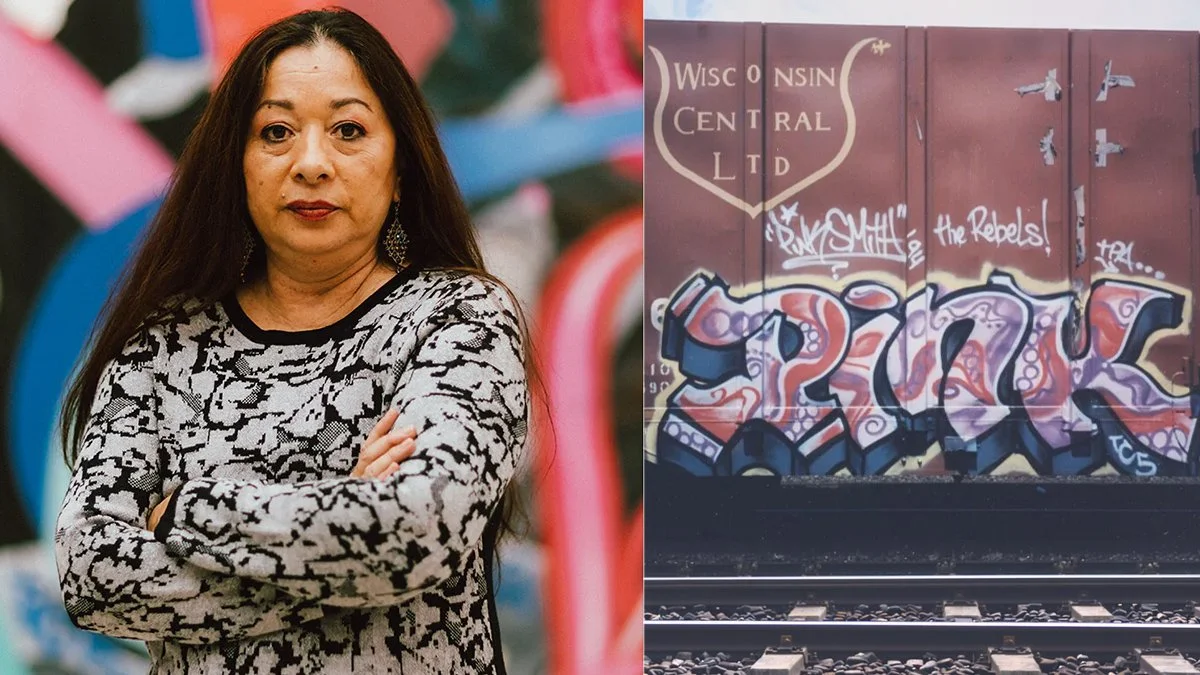
Lady Pink escaped two vandal squad raids by moving upstate to live a more peacful and prosperous life as a fine artist.
Lady Pink has spent more than four decades moving between New York’s graffiti world and the traditional art world. Born in Ecuador, she moved to New York as a child and remembers struggling to adjust, including learning English and experiencing racism at school. As a teenager, she began spending more time on the streets and eventually found graffiti. “I learned how to be a streetwise urchin,” she says. “And perhaps that’s how I picked up graffiti.”
Graffiti quickly became its own kind of education, but moving from the underground into galleries was more complicated. “Just navigating as an artist and surviving in the above-ground world it was complex,” she says. As a teenager, Lady Pink began exhibiting alongside artists including Keith Haring, Jean-Michel Basquiat, John Fekner and Jenny Holzer. She remembers meeting Basquiat during an exhibition at P.S.1 when she was 17. He had a wet painting on the floor and asked her to walk through it, leaving her footprints behind. At the time, she was also attending art school, where she was being taught to make things “neat and tidy and proper.” Basquiat represented the opposite. “This is insane. Utterly insane,” she remembers thinking. “I wanted more of it.”
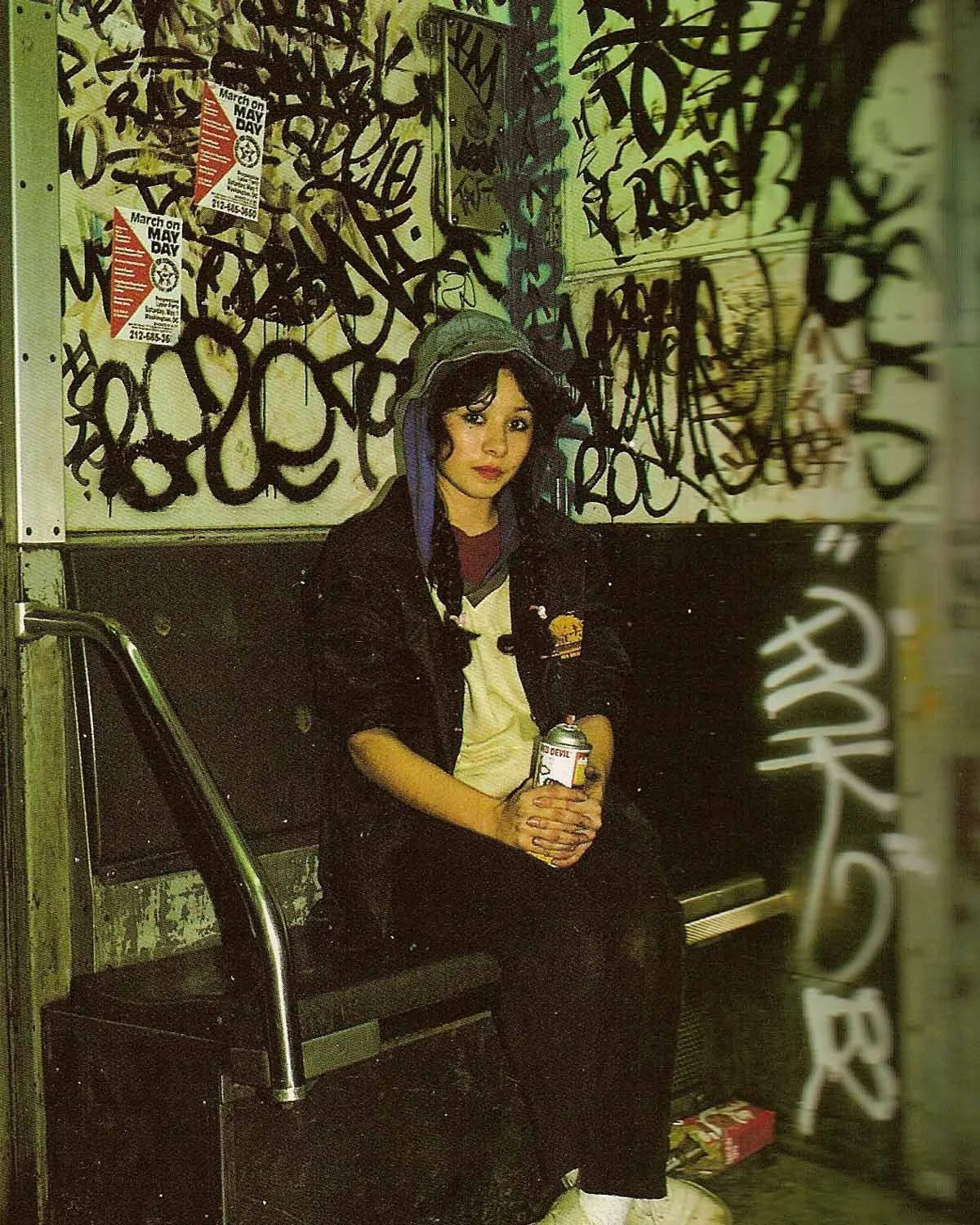


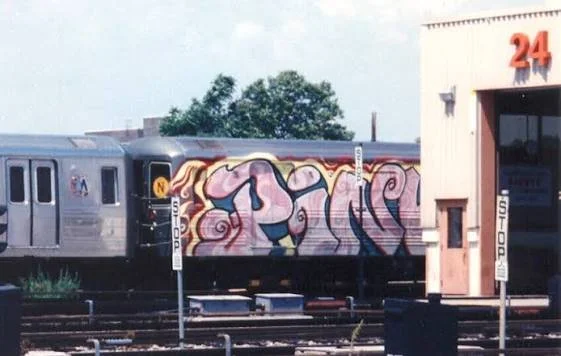
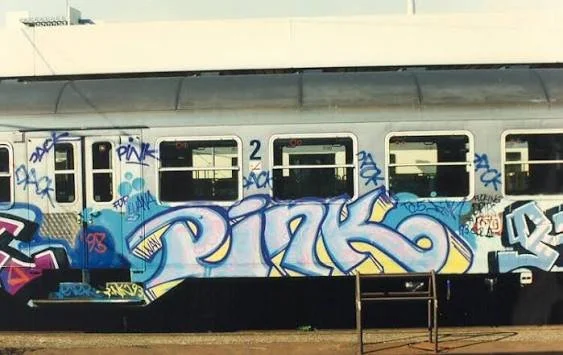
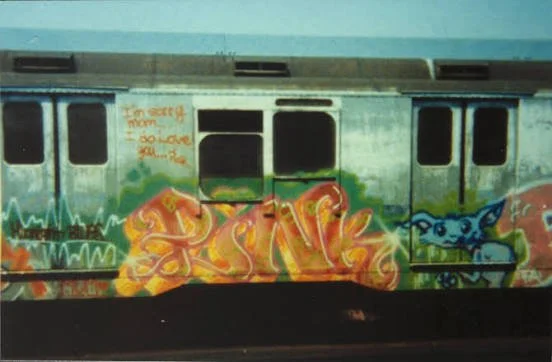
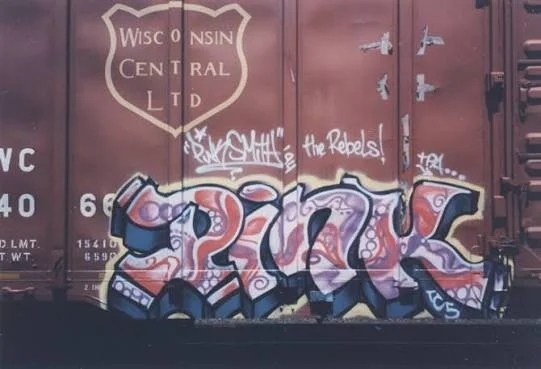
Lady Pink would eventually become one of the most important women in New York graffiti, but her relationship with the city has remained complicated. She says repeated police attention toward graffiti writers contributed to her decision to leave New York and move to the Hudson Valley. During one raid, she remembers officers arriving at her home with helmets, shields and guns drawn. For her, the experience reflects the contradiction surrounding graffiti today: a culture celebrated by museums, galleries and brands while many of the people who created it can still be treated as criminals. “They don’t like that we are prospering in what they perceive is a crime,” she says.
After decades working across both worlds, Lady Pink has never really separated the graffiti writer from the artist. Her story traces the transformation of graffiti itself from something created illegally on New York streets and subway cars into a movement now embedded in contemporary art history. Through it all, she has continued to make work on her own terms.